Characterising multiple complex media with machine learning
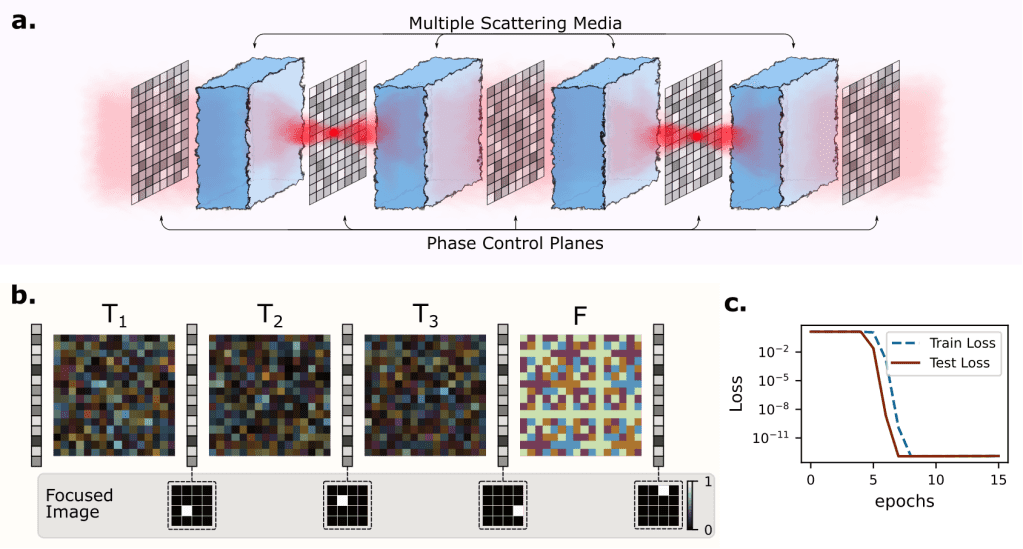
In our new preprint titled Referenceless characterisation of complex media using physics-informed neural networks, we show how multi-plane neural networks (MPNN) can be used to recover the complex transmission matrix of a commercial multi-mode fibre in a noise-robust manner, without using a reference field! We also show how the MPNN technique can be used to characterise a series of independent complex media, as shown in the figure above. This work will have many applications ranging from classical optical networks, biomedical imaging, to quantum information processing. As just one example, the MPNN technique forms a central part of our previous work on programming high-dimensional quantum gates inside a multi-mode fibre using inverse-design.
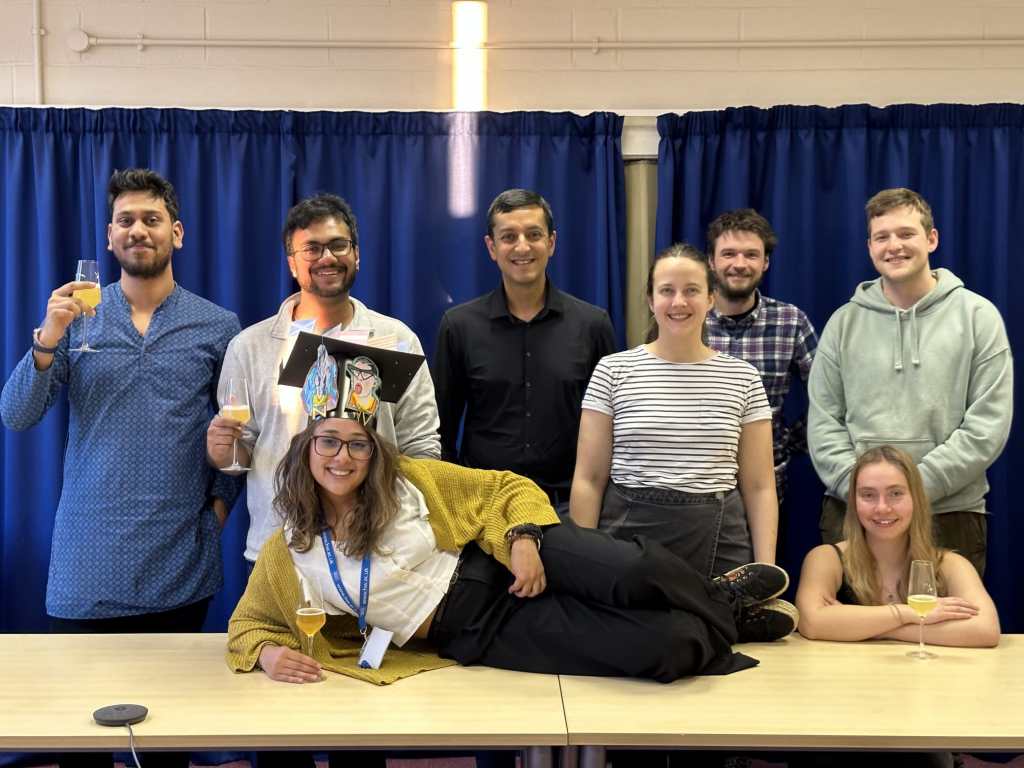
A huge congratulations to Dr. Natalia Herrera Valencia for successfully defending her PhD thesis! Natalia joined us in 2019 following a Europhotonics Erasmus Mundus Masters. Her thesis work has focused on the development of a new platform for high-dimensional entanglement and its unprecedented transport through a complex scattering medium. Natalia will continue as a postdoctoral research associate in BBQLab and we are very pleased that she is staying with us for some more time!
Poster advertising Natalia’s PhD seminar, designed by the talented Vatshal Srivastav
Mehul continues his award-winning streak! Through the Chair in Emerging Technologies programme, the Royal Academy of Engineering has recognised Mehul as a visionary and world-leading researcher that will harness the spatial and temporal structure of light to develop an emergent photonics platform for high-capacity quantum networks that operate in a noisy, real-world environment.
Mehul is one of only four academics in the UK to receive this £2.5 million award over a period of up to 10 years, which enables a sustained and strategic focus on advancing emerging technologies with high potential to deliver economic and social benefits. With support from project partners BT Group and the NASA Jet Propulsion Lab, Mehul’s 10-year research programme aims to translate the fundamental advances developed in BBQ Lab into applications that will have a direct impact on our modern society.
Exciting things coming, stay tuned! Congratulations Mehul!
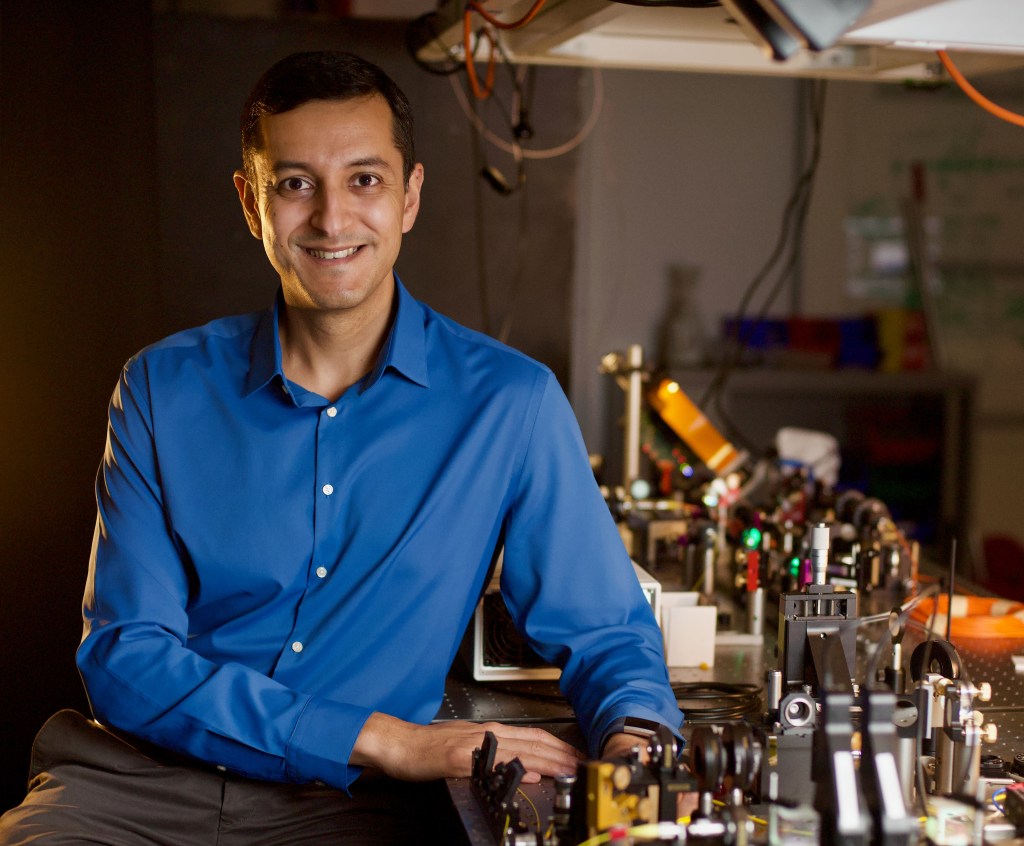
Who said group leaders don’t spend time in the lab?
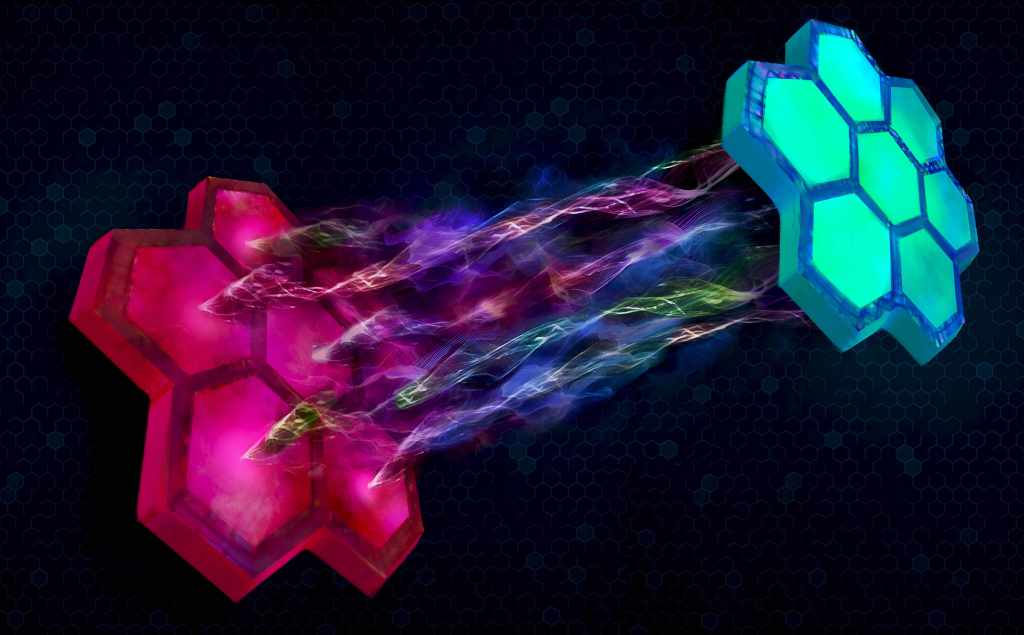
Quantum steering is a phenomenon in quantum physics that occurs when two parties, say Joe and Rishi, share an entangled state—a state of two particles that is strongly correlated, no matter how far apart the particles are. By making specific measurements on his particle in London, Rishi can then “steer” the quantum state of Joe’s particle in Washington to behave a certain way. The physicist Erwin Schrodinger called this steering of the wavefunction “magic,” as it forces Joe to believe that Rishi can influence his particle from a distance (it is important to note that Rishi cannot transfer any information instantaneously to Joe in this manner).
However, this form of entanglement is also easily destroyed in a realistic environment that includes loss and noise, which limits its use in applied scenarios such as quantum communication. In this work, we develop a new theoretical test of quantum steering that not only works under massive amounts of loss and noise, but can also be performed very quickly. We were able to demonstrate it in the lab by harnessing the inherent high-dimensional nature of light—photons entangled in their spatial structure.
Our results are significant for the development of practical quantum communication technologies. Even the best optical fibres in the world suffer from a certain amount of loss, which puts strict limitations on the distance over which entanglement-based quantum communication can be carried out. Having a loss-tolerant method for steering entanglement opens a pathway towards practical quantum communication networks with the ultimate form of security. The simultaneous ability to withstand noise could also allow such networks to operate over our existing telecommunications links, which would carry noisy classical traffic at the same time.
We are currently advertising two 4-year PhD positions in our group. If you are interested in joining us, please look at our Openings page for more information. These positions will be open for applications until January 31st, 2023.



 BBQ Lab