Our own Chair in Emerging Technologies

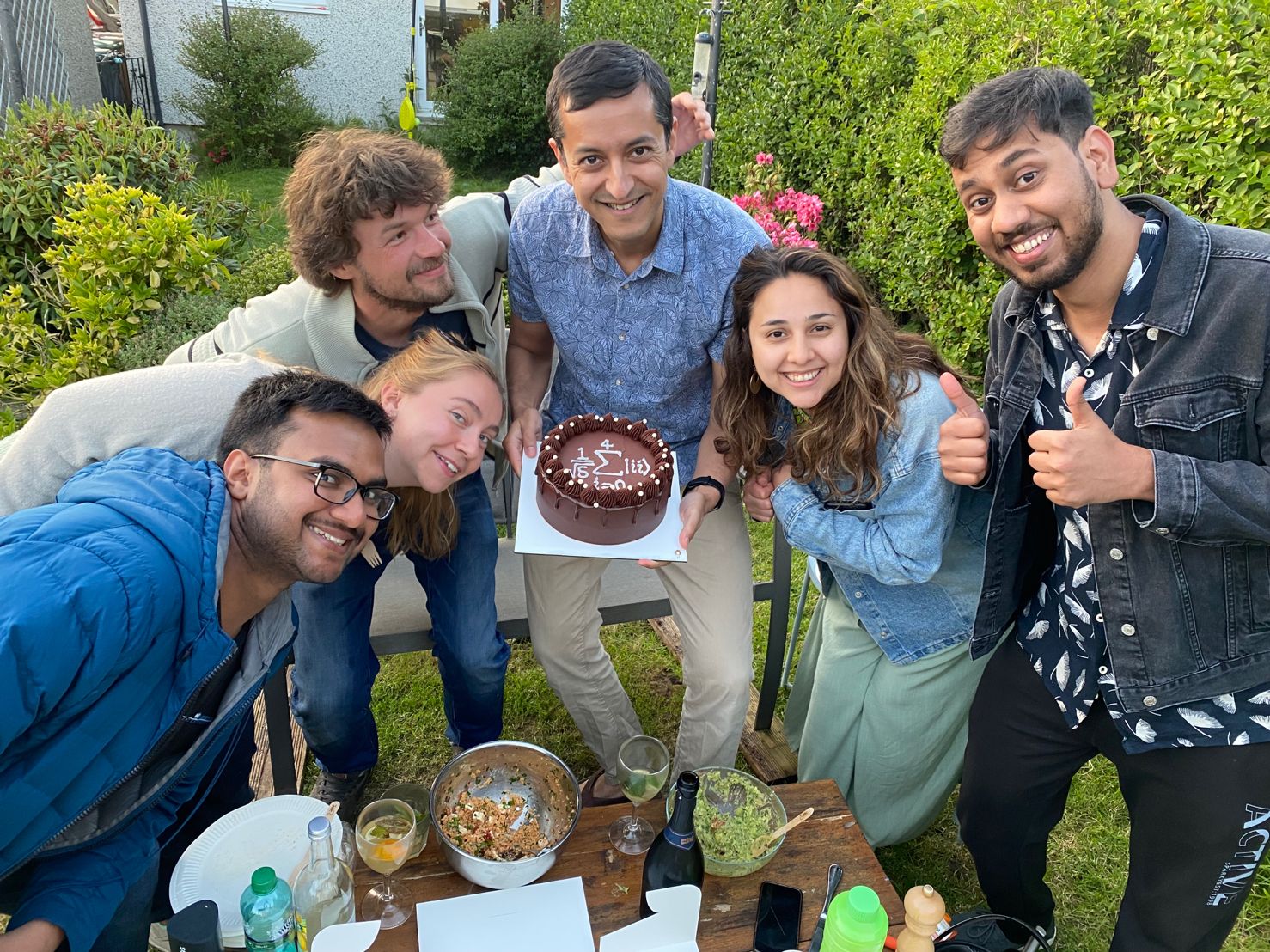
Mehul continues his award-winning streak! Through the Chair in Emerging Technologies programme, the Royal Academy of Engineering has recognised Mehul as a visionary and world-leading researcher that will harness the spatial and temporal structure of light to develop an emergent photonics platform for high-capacity quantum networks that operate in a noisy, real-world environment.

Mehul is one of only four academics in the UK to receive this £2.5 million award over a period of up to 10 years, which enables a sustained and strategic focus on advancing emerging technologies with high potential to deliver economic and social benefits. With support from project partners BT Group and the NASA Jet Propulsion Lab, Mehul’s 10-year research programme aims to translate the fundamental advances developed in BBQ Lab into applications that will have a direct impact on our modern society.

Exciting things coming, stay tuned! Congratulations Mehul!

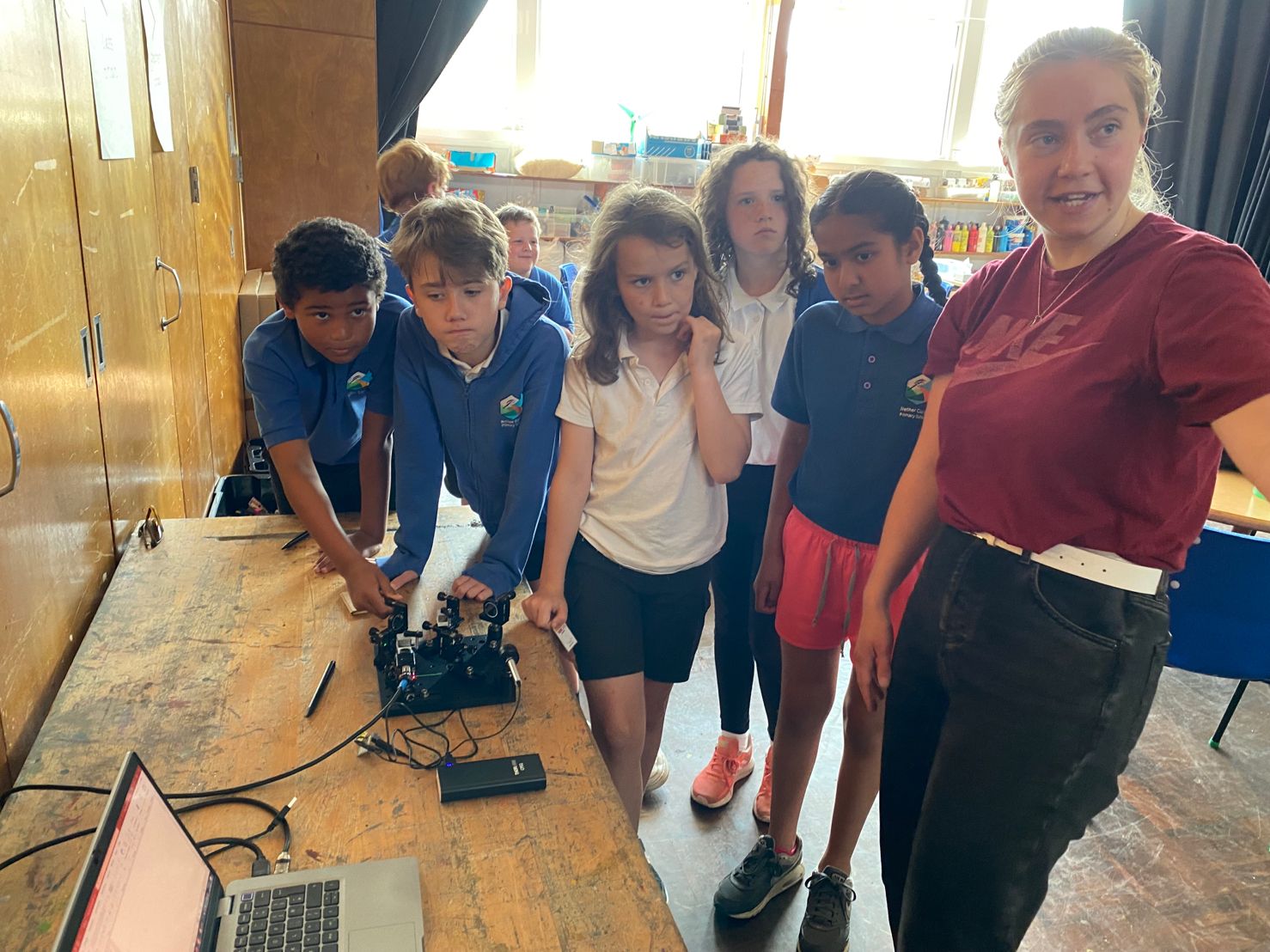
Who said group leaders don’t spend time in the lab?

PRX: Loss and Noise-robust Quantum Steering

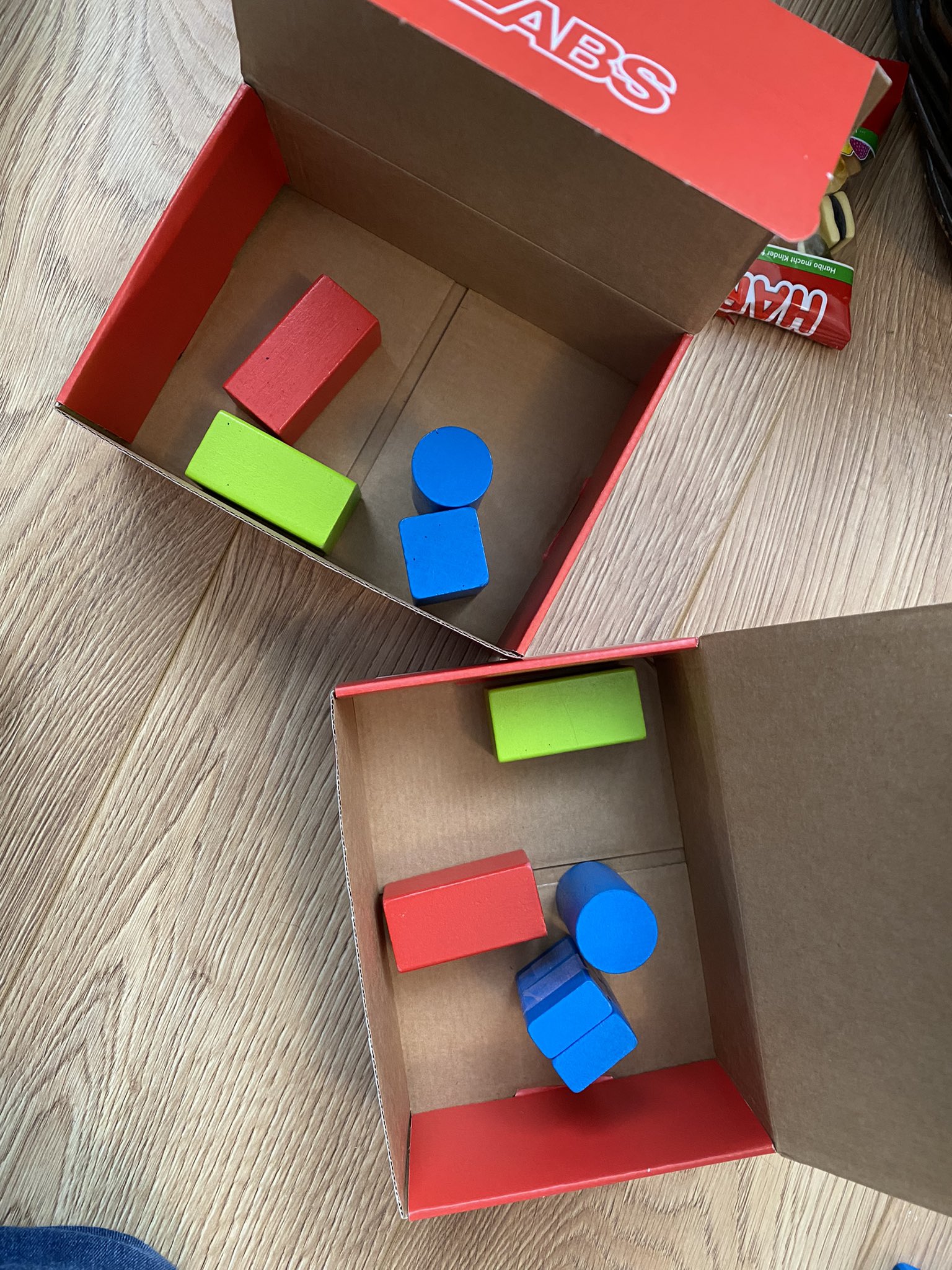
Our resident artist’s depiction of high-dimensional entanglement that is simultaneously robust to noise and loss (Credit: Vatshal Srivastav)

We are very excited to share our new publication, “Quick Quantum Steering: Overcoming Loss and Noise with Qudits,” which was published today in the leading APS journal Physical Review X!

Quantum steering is a phenomenon in quantum physics that occurs when two parties, say Joe and Rishi, share an entangled state—a state of two particles that is strongly correlated, no matter how far apart the particles are. By making specific measurements on his particle in London, Rishi can then “steer” the quantum state of Joe’s particle in Washington to behave a certain way. The physicist Erwin Schrodinger called this steering of the wavefunction “magic,” as it forces Joe to believe that Rishi can influence his particle from a distance (it is important to note that Rishi cannot transfer any information instantaneously to Joe in this manner).

However, this form of entanglement is also easily destroyed in a realistic environment that includes loss and noise, which limits its use in applied scenarios such as quantum communication. In this work, we develop a new theoretical test of quantum steering that not only works under massive amounts of loss and noise, but can also be performed very quickly. We were able to demonstrate it in the lab by harnessing the inherent high-dimensional nature of light—photons entangled in their spatial structure.

Our results are significant for the development of practical quantum communication technologies. Even the best optical fibres in the world suffer from a certain amount of loss, which puts strict limitations on the distance over which entanglement-based quantum communication can be carried out. Having a loss-tolerant method for steering entanglement opens a pathway towards practical quantum communication networks with the ultimate form of security. The simultaneous ability to withstand noise could also allow such networks to operate over our existing telecommunications links, which would carry noisy classical traffic at the same time.

This work received media coverage in 145 news outlets (a new BBQLab record!) and was done in collaboration with our close collaborators Prof. Nicolas Brunner, Dr. Roope Uola, and Sebastien Designolle at the University of Geneva, Switzerland. See selected coverage of our work in APS Physics Magazine, UKRI News, The Independent, London Evening Standard, and The Daily Mail.

HW Press release: Quantum leap for Heriot-Watt research into unhackable communications networks
Journal reference: V. Srivastav et al, “Quick Quantum Steering: Overcoming Loss and Noise with Qudits,” Physical Review X 12, 041023 (2022), DOI: 10.1103/PhysRevX.12.041023.

PR Applied: Characterizing and tailoring multimode SPDC

(a) The process of spontaneous parametric down-conversion (SPDC) generates a two-photon wavefunction entangled in transverse position-momentum (b) We show how to measure this wavefunction efficiently and use it to tailor high-dimensional entangled states.

We are pleased to announce the publication of ‘Characterizing and Tailoring Spatial Correlations in Multimode Parametric Down-Conversion’ in Physical Review Applied. In this article, we have developed a detailed theoretical model for the quantum state of two photons entangled in their transverse position and momentum. Our model incorporates the systems used for generating entanglement and measuring it, both of which play a significant role in what the final two-photon entangled state looks like. We introduce and demonstrate a simple and efficient method to quickly characterise the two-photon joint-transverse-momentum amplitude (JTMA) using scanned phase-only holograms. We use knowledge of the JTMA to precisely tailor discrete, high-dimensional entangled states of light in the Laguerre-Gaussian (LG) and Pixel bases. We expect our work to have wide-ranging applications in experiments on multi-mode SPDC, as well as for entanglement-based quantum technologies for communication, imaging, and computation.

And the 2022 Nobel Prize goes to…

John Clauser, Anton Zeilinger and Alain Aspect have won this year’s Nobel physics prize for their research on quantum entanglement

We would like to congratulate Alain Aspect, John Clauser, and Anton Zeilinger for winning the 2022 Nobel Prize in Physics! The prize was awarded for “experiments with entangled photons, establishing the violation of Bell inequalities and pioneering quantum information science”—a very exciting development for our field!

Congratulations Anton!

A very special congratulations goes out to Professor Zeilinger, whom Mehul spent several years working with in Vienna, before moving to Edinburgh and starting the BBQ Lab. In recognition of the award, the Nature portfolio of journals has put together a beautiful collection of articles by the awardees and advances they have inspired. We are pretty chuffed to see four of our papers in there (two authored with Anton, and two from our group at Heriot-Watt)!