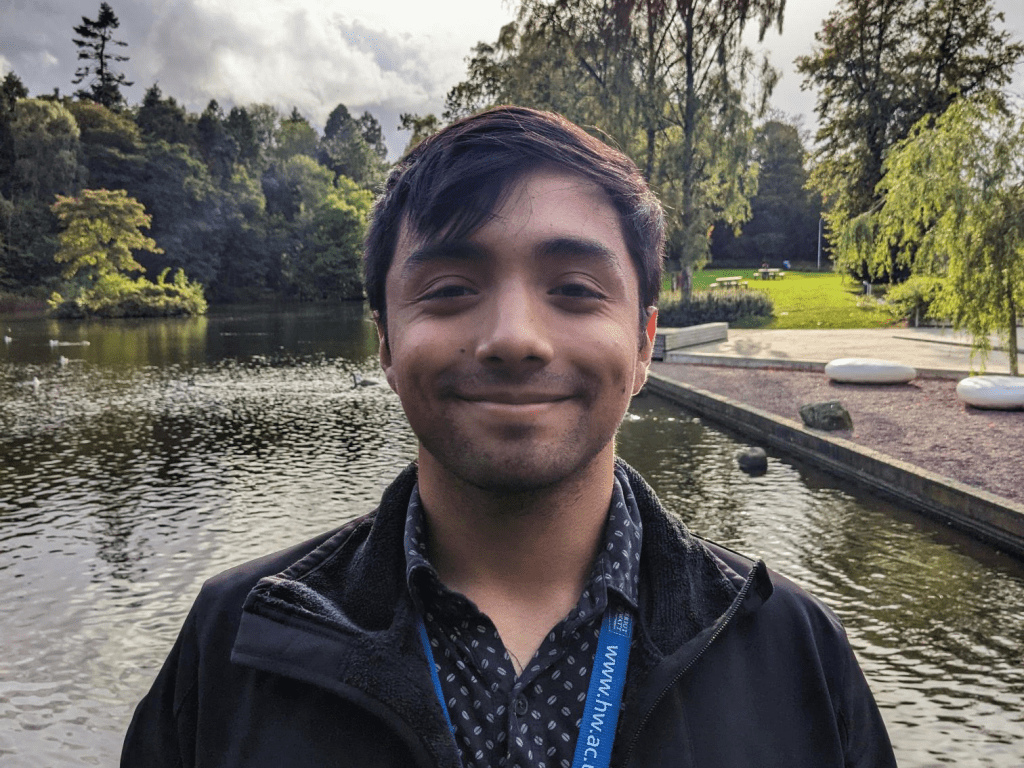
We are excited to welcome our newest PhD student: Daniel Sabogal!
Daniel is joining us from Bogotá, Colombia, where he completed his undergraduate and Master’s degree at Universidad de los Andes. After gaining experience in both theoretical and experimental quantum photonics, he is looking forward to exploring the world of high-dimensional systems.
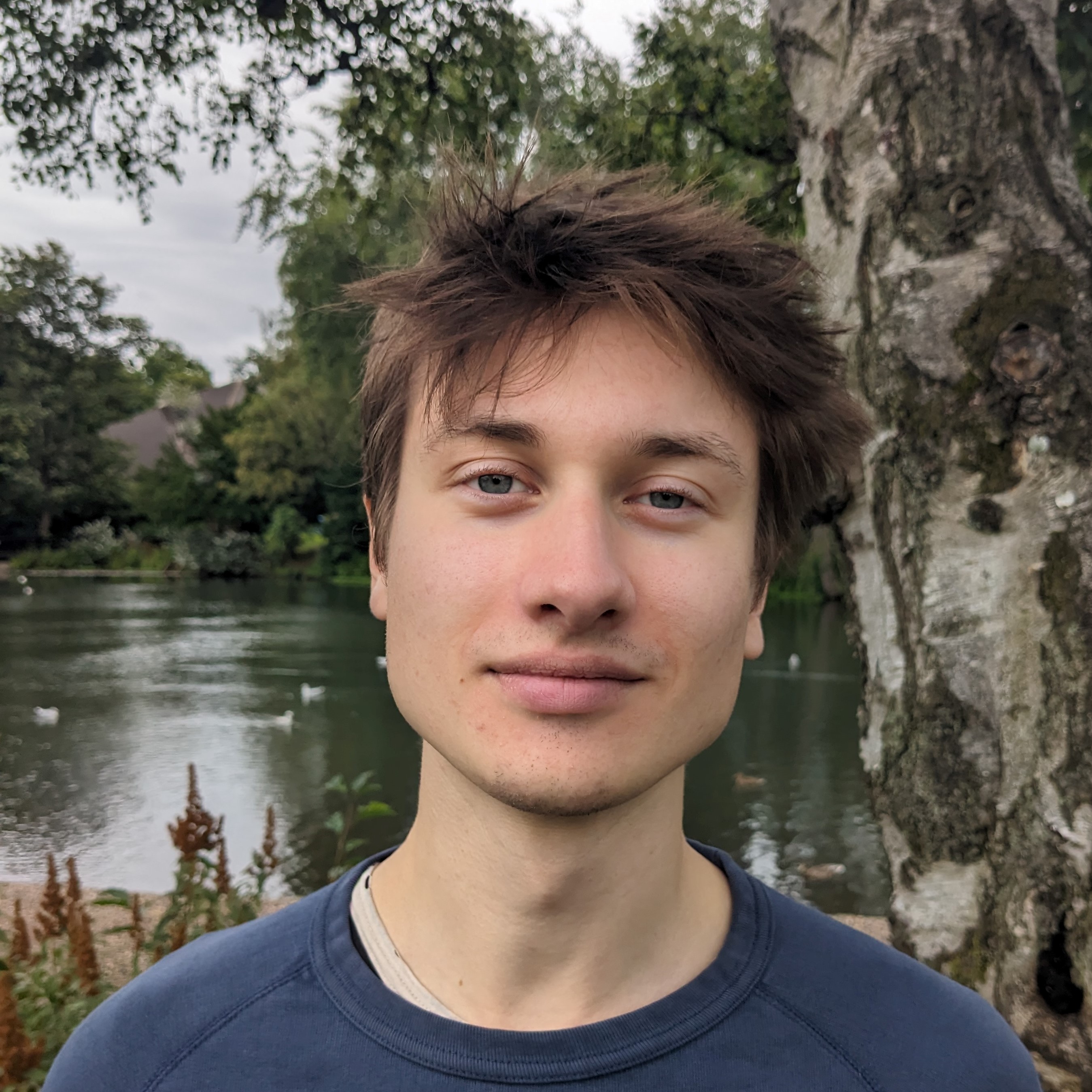
We are happy to welcome a new intake of undergrad students to BBQ Lab! Jade and Philipp just finished their 3rd year and are spending their summers in our lab learning about high-dimensional entanglement sources and the control of spatial modes of light using multi-plane light converters.
After the summer (don’t let the pics fool you, we also get those in Edinburgh… and they last a good couple of weeks), Jade and Philipp will continue their good work doing their 4th-year undergrad projects with us.
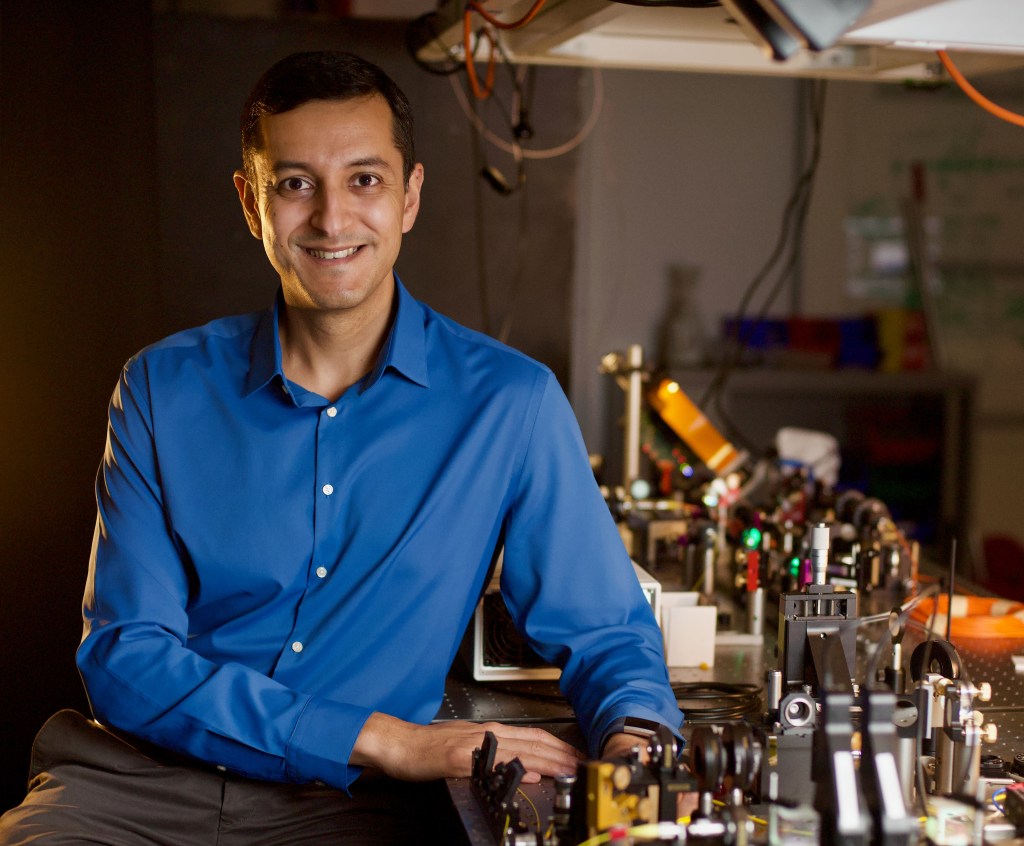
Mehul continues his award-winning streak! Through the Chair in Emerging Technologies programme, the Royal Academy of Engineering has recognised Mehul as a visionary and world-leading researcher that will harness the spatial and temporal structure of light to develop an emergent photonics platform for high-capacity quantum networks that operate in a noisy, real-world environment.
Mehul is one of only four academics in the UK to receive this £2.5 million award over a period of up to 10 years, which enables a sustained and strategic focus on advancing emerging technologies with high potential to deliver economic and social benefits. With support from project partners BT Group and the NASA Jet Propulsion Lab, Mehul’s 10-year research programme aims to translate the fundamental advances developed in BBQ Lab into applications that will have a direct impact on our modern society.
Exciting things coming, stay tuned! Congratulations Mehul!
Who said group leaders don’t spend time in the lab?
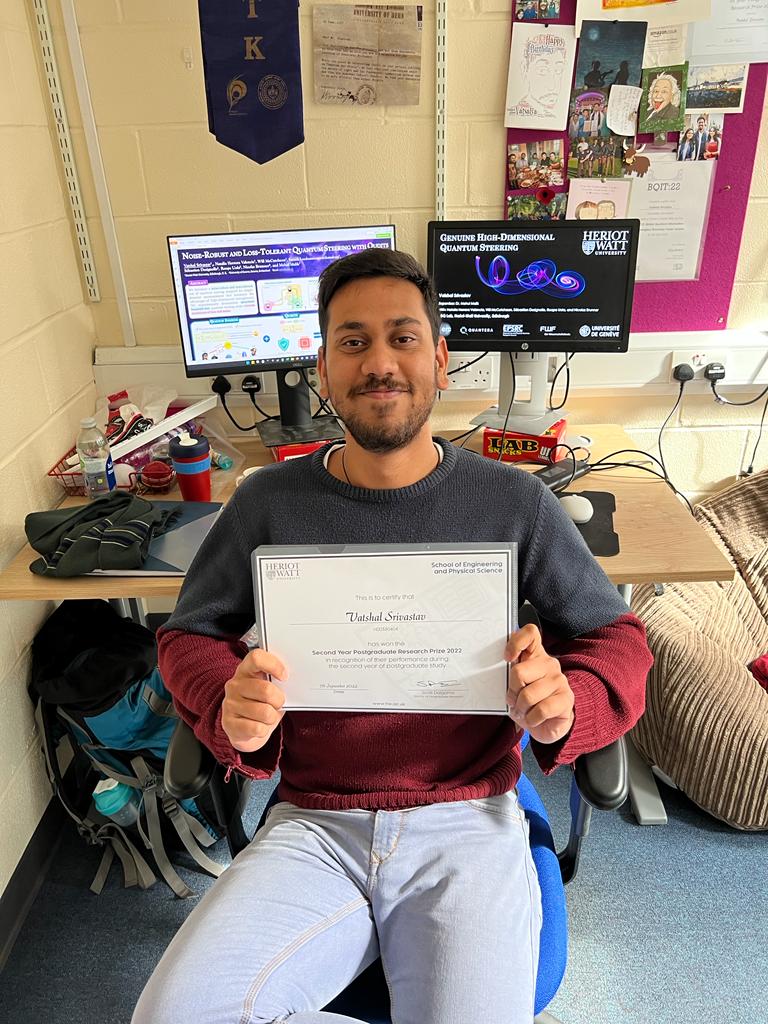
… And the 2nd year Postgraduate Research Prize goes to… our own Vatshal Srivastav!
We are very happy to announce that the School of Engineering and Physical Sciences here at Heriot-Watt has recognised Vatshal’s hard work and outstanding achievements by awarding him this year’s 2nd year Postgraduate Research Prize.
This prize is awarded to PhD students who have completed approximately 2 years of study and have made excellent progress in their research. The judging criteria included: quality, originality, awareness of wider literature, and output in terms of publications and presentations.
The knowledge of the collected joint-transverse-momentum-amplitude (JTMA) allows us to choose and tailor appropriate discrete variable bases to harness high-dimensional entanglement.
In a recent article published on arXiv, we have formalised the description for a two-photon position-momentum entangled state generated through spontaneous-parametric-down-conversion, referred to as the collected joint-transverse-momentum-amplitude (JTMA). This function characterizes the bi-photon state in the momentum degree-of-freedom while incorporating the effects of both the generation and measurement systems.
In this work, we formulate a theoretical model, propose a practical and efficient method to accurately reconstruct the collected JTMA, and demonstrate our technique by implementing it on two experiments in the continuous-wave near-infrared and pulsed telecom wavelength regimes. Furthermore, we discuss how accurate knowledge of the collected JTMA enables us to generate tailored discrete-variable high-dimensional entangled states that maximise metrics relevant to quantum information processing



 BBQ Lab